When a tree needs to come down, one of the first questions most homeowners ask is simple: how much will it cost? The honest answer is that tree removal pricing depends on several factors that vary from tree to tree and property to property. The size of the tree, its condition, where it sits on your lot, how easily equipment can reach it, and what cleanup you want afterward all shape the final quote. This guide explains what drives tree removal costs throughout the Greater Cincinnati Tri-State — including Southeast Indiana, Northern Kentucky, and Southwest Ohio — so you understand what goes into a quote and why no two jobs are priced exactly the same. We won't publish generic price numbers, because a real quote requires seeing the actual tree and site.
What Factors Affect Tree Removal Costs?
Tree removal is not a flat-rate service. Every tree sits in a unique environment, and the conditions that make one tree a quick job can make another a carefully planned project. Understanding these factors helps explain why quotes vary and what information helps a tree service give you an accurate price.
Tree Size and Height
Size is the single biggest driver of tree removal cost. A taller tree with a wide canopy and thick trunk requires more labor, more cuts, more equipment reach, and more time on site than a smaller tree. A tree that can be taken down in a few large pieces costs less than one that must be dismantled limb by limb. The diameter of the trunk also matters — a thick trunk means heavier, harder-to-handle wood sections and more debris to process.
Tree Location and Accessibility
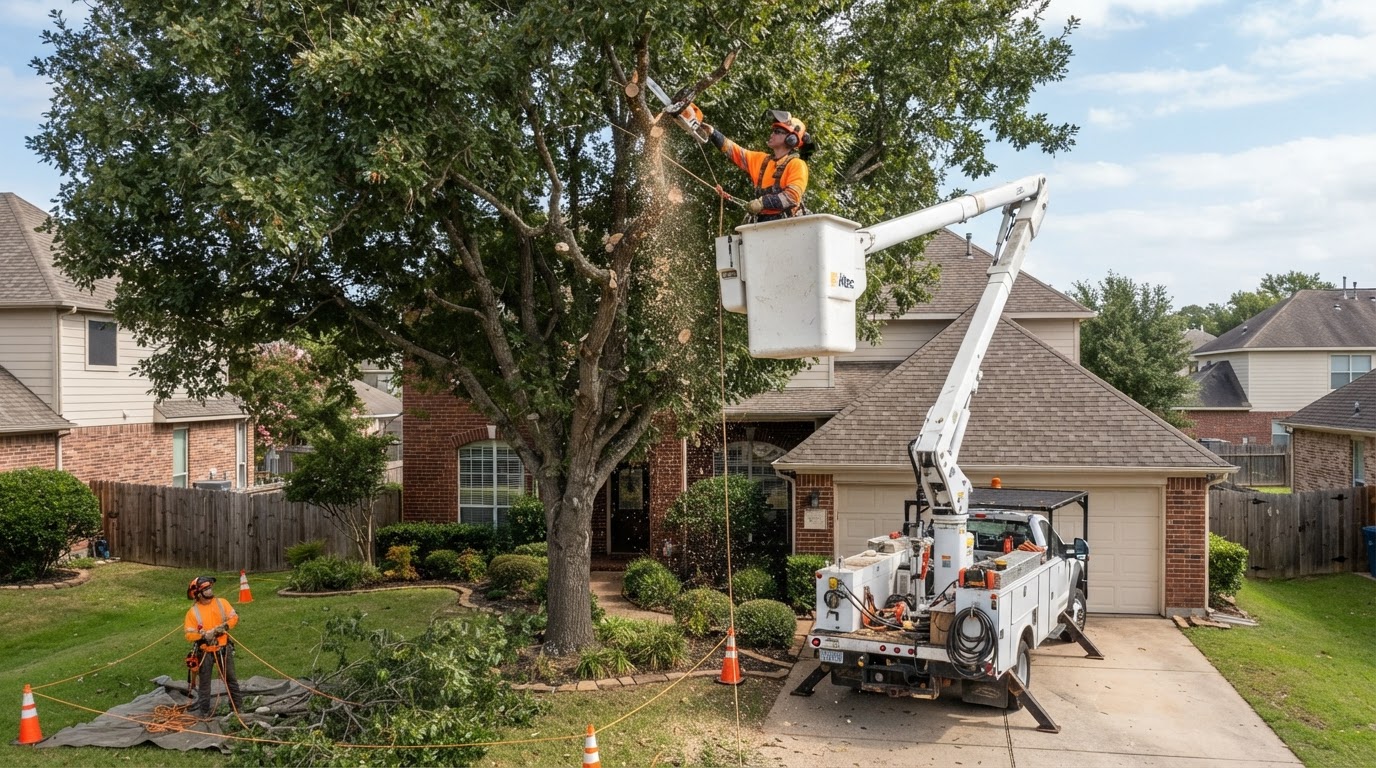
Where the tree sits on your property has a major impact on price. A tree in an open yard with clear drop zones is the simplest scenario. But when a tree grows close to a house, garage, fence, shed, or power line, the crew must control every piece they cut — lowering limbs with ropes, rigging them around obstacles, and sometimes working from a bucket truck to avoid damaging anything nearby. Tight access for equipment, narrow gates, slopes, and landscaping features can all add time and complexity.
Tree Condition
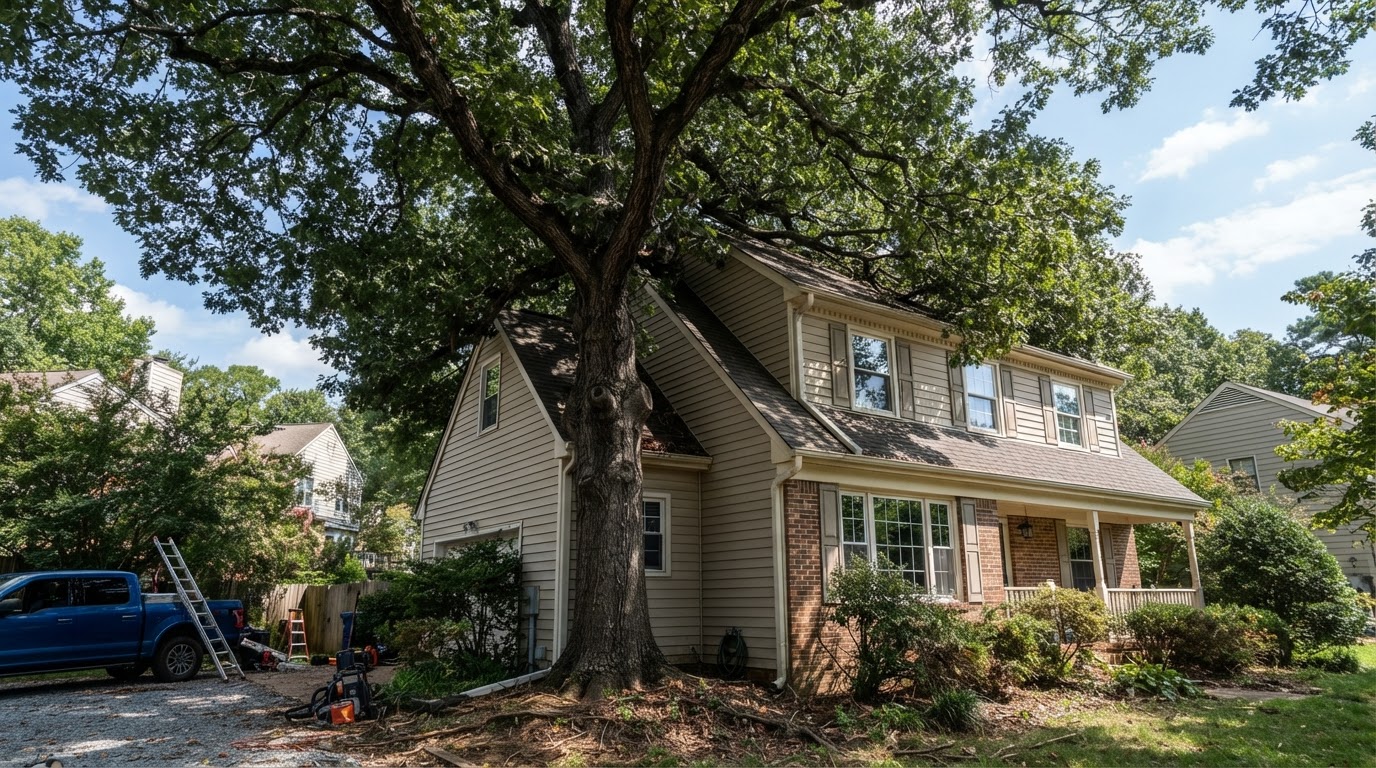
A healthy, standing tree is one situation. A dead tree, a tree with a split trunk, or one that is already leaning can be a very different project. Hazardous trees may require additional safety planning, specialized rigging, or a bucket truck to keep the crew out from under the tree while they work. Conversely, a solid, healthy tree can sometimes be climbed and dismantled more directly. A tree's condition also affects how it comes apart — brittle or rotten wood breaks unpredictably and must be handled more carefully.
Equipment and Labor Requirements
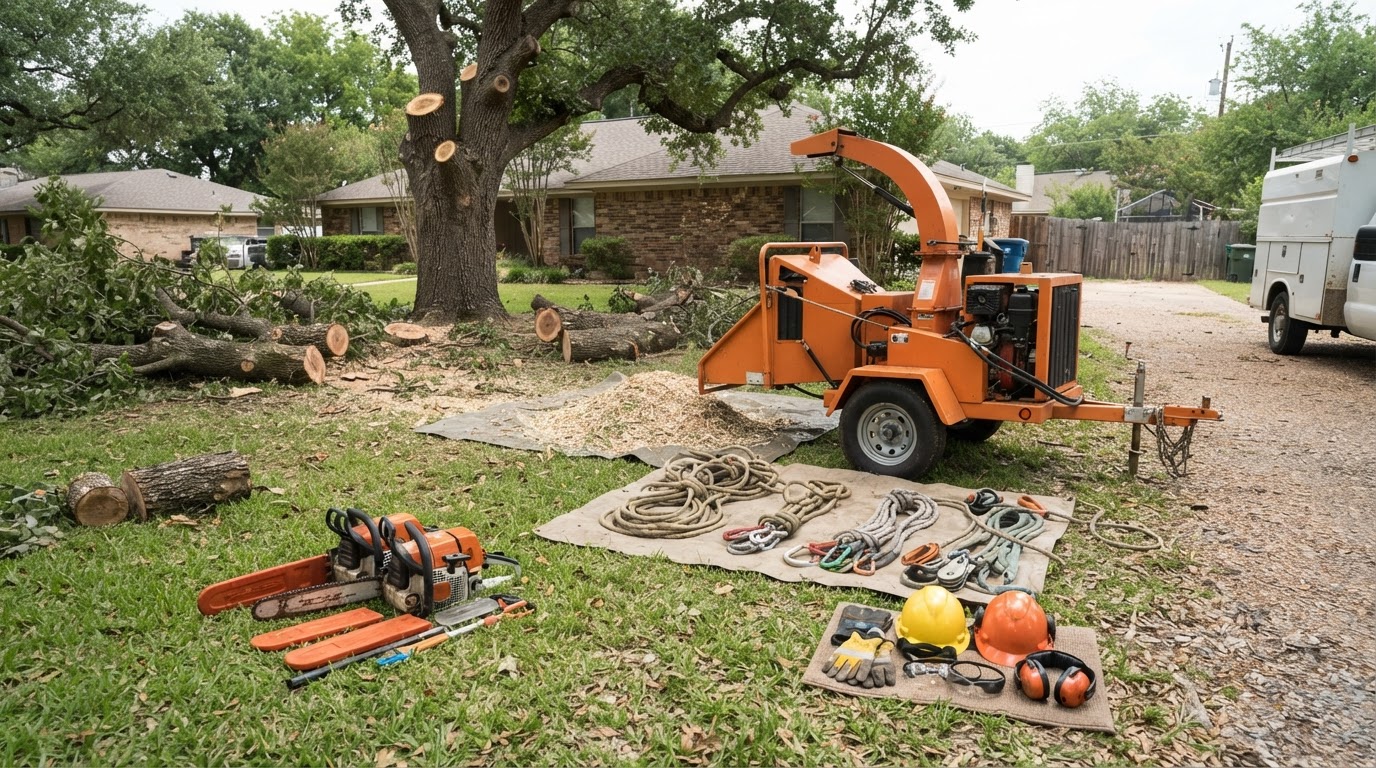
The equipment needed for safe removal directly affects the cost. A small tree in an open yard may only need a crew with chainsaws and a chipper. A tall tree near a house may require a bucket truck, rigging gear, and additional crew members to manage ropes and control the descent of each piece. Equipment that must be brought to the site adds to the project's complexity, and jobs that require more crew or specialized gear are priced accordingly.
Emergency and Storm-Damaged Tree Removal
Emergency and storm-damaged tree work often involves different circumstances than a planned removal. A tree that has fallen on a house, a fence, or a driveway may be under tension, partially supported by a structure, or tangled with other trees. That work requires careful, piece-by-piece dismantling to relieve tension safely rather than cutting freely. Urgent scheduling, after-hours response, and the added risk of working around damaged structures and downed lines can all influence the cost of emergency work. If you are dealing with a tree that has fallen on or near power lines, stay well clear and contact your utility company or emergency services.
Debris Removal and Cleanup
Taking a tree down and hauling everything away are two parts of the same job, but the scope of cleanup affects price. Some homeowners want every limb and piece of trunk wood chipped and hauled off. Others prefer to keep the firewood or have larger logs left on site. The more material that must be cut, chipped, loaded, and hauled, the more labor and disposal are involved. Clarifying what cleanup you expect helps ensure your quote reflects the work you actually want.
Stump Grinding
Removing a tree and grinding its stump are separate services, and stump grinding is often priced separately from the tree removal itself. After the trunk is cut near ground level, the remaining stump and surface roots can be ground down below grade so the area can be reseeded, sodded, or landscaped over. Whether you want the stump ground, left as-is, or fully removed is a decision that affects the total scope — and price — of the project.
Does It Cost More to Remove a Large Tree?
In most cases, yes. Large trees cost more to remove than smaller ones because every part of the job scales with size. A large tree has more height to reach, a wider canopy to dismantle, a thicker trunk to cut and handle, and more total wood and debris to process. The crew must plan more carefully to bring each section down safely, and the equipment needed — taller bucket trucks, heavier rigging, larger chippers — reflects the scale of the tree.
A small ornamental tree in an open area may be a straightforward job. A mature shade tree near a house, with a wide canopy overhanging the roof, is a more complex project that requires planning and controlled dismantling. Size alone doesn't determine price, but it is one of the most consistent factors — and the combination of size with poor access or nearby obstacles is what drives the most complex (and therefore most expensive) removals.
Rather than relying on published averages that may not reflect your tree, the best way to understand the cost of removing a large tree is a site-specific assessment. A professional can look at the tree's height, trunk diameter, lean, and surroundings and give you a quote based on the actual work required.
Is Emergency Tree Removal More Expensive?
Emergency tree removal often involves circumstances that differ from a planned removal, and those circumstances can affect the cost. Storm damage can mean a tree that is partially uprooted, split, or resting on a structure — situations that require careful, time-intensive dismantling rather than straightforward cutting. Urgent scheduling, after-hours response, and the added risk of working around damaged structures, downed lines, and unstable trees all contribute to the scope of the work.
If a storm has damaged a tree on your property, the priority is safety. Stay away from any leaning, split, or hanging tree, especially one near power lines or resting on a structure. Keep people and pets clear of the area, and call a tree service that handles emergency work. Documenting the damage with photos — when it is safe to do so — can also help with an insurance claim.
Is Stump Grinding Included in Tree Removal?
Not always. Tree removal and stump grinding are separate services, and whether the stump is ground is something to clarify when you request a quote. Some homeowners only need the tree taken down; others want the stump ground so the area can be replanted or landscaped. The cost of grinding depends on the stump's diameter, how many stumps are on site, and whether surface roots also need to be ground.
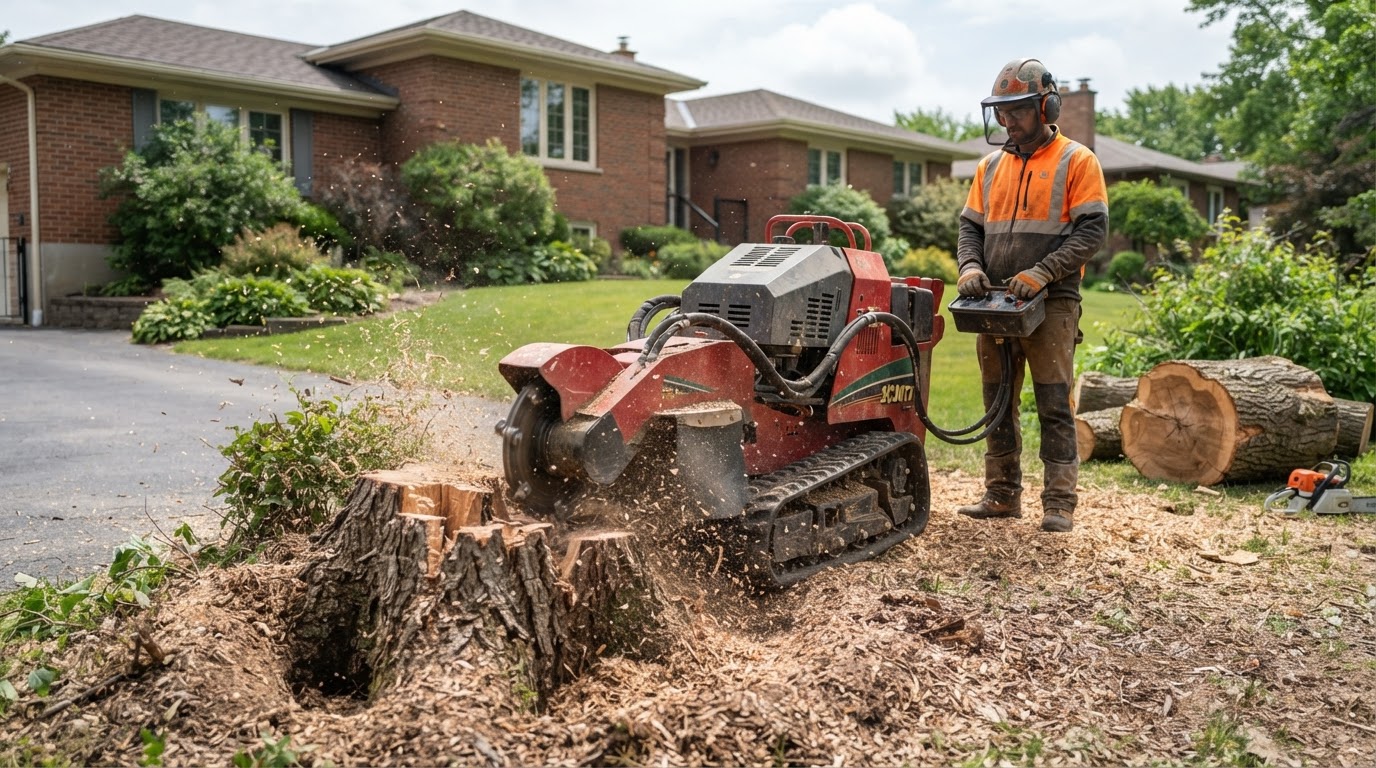
It is worth asking whether your quote includes stump grinding, wood removal, and site cleanup, or whether those are quoted separately. A clear quote should spell out exactly what is and isn't included so there are no surprises when the work is done.
How Can Homeowners Get an Accurate Tree Removal Estimate?
The most accurate quote comes from a professional assessment of the actual tree and site, because so much of the cost depends on what can only be seen in person. But you can help a tree service give you a reliable quote by sharing useful information up front.
Helpful details include an approximate size or height of the tree; where the tree is located on the property and how accessible it is; any visible damage, decay, lean, or dead branches; nearby structures, power lines, fences, or other obstacles; whether the stump needs to be ground; and what cleanup you want — full haul-away, keeping firewood, or leaving wood on site.
Photos can help, especially for a preliminary conversation, but a final quote usually requires seeing the tree and site in person. The more clearly you can describe the tree and its surroundings, the more accurately a tree service can plan the work — and the more confident you can be in the price you receive.
MMM Tree Service provides free, no-obligation quotes for tree removal throughout the Greater Cincinnati Tri-State. We assess the tree, explain what the work involves, and give you a clear price before any work begins. For more on the warning signs that a tree may need to come down, see our guide to seven warning signs a tree may need to be removed.
Frequently Asked Questions About Tree Removal Costs
Below are concise answers to common questions about tree removal pricing. Because every tree and property is different, these answers explain the factors that drive cost rather than publishing dollar amounts.
Related Questions
How much does it cost to remove a large tree?
Large trees generally cost more to remove than small ones because they require more labor, equipment reach, and time to dismantle safely. Cost depends on the tree's height, trunk diameter, lean, condition, and what surrounds it. The most accurate way to price a large tree removal is a site-specific quote from a professional who can see the actual tree.
Is removing a dead tree more expensive?
Not always, but it can be. A dead or decaying tree may be more brittle and unpredictable, which can require more careful rigging and safer working distances. In some cases a dead tree is actually faster to remove. The condition of the tree is one factor among many — a professional assessment is the best way to understand how it affects your specific job.
Does homeowners insurance pay for tree removal?
It depends on your policy, the cause of the damage, and the circumstances. Many policies cover removal when a tree damages an insured structure, but coverage varies widely and often depends on whether the tree was healthy, diseased, or already dead, and how it fell. This is not insurance or legal advice — confirm your specific coverage with your insurance provider.
Is stump grinding included in the price?
Not always. Tree removal and stump grinding are separate services and may be priced separately. When you request a quote, ask specifically whether stump grinding, wood haul-away, and site cleanup are included so you understand the full scope of the price.
Can I get a free tree removal quote?
Yes. MMM Tree Service offers free, no-obligation quotes for tree removal throughout the Greater Cincinnati Tri-State. We assess the tree and site and provide a clear price before any work begins.
What makes tree removal more expensive?
The factors that most often increase cost are large tree size, a location near structures or power lines, limited equipment access, a hazardous or storm-damaged condition, and additional services like stump grinding and full debris haul-away. Each of these adds labor, equipment, or planning time to the job.
Need a Tree Removal Quote in the Greater Cincinnati Tri-State?
If you have a tree that needs to come down, MMM Tree Service provides professional tree removal throughout Southeast Indiana, Northern Kentucky, and Southwest Ohio. We assess the tree, explain the work, and give you a clear, no-obligation quote before any work begins. Every tree and property is different — that's why a free, on-site quote is the most accurate way to know what your project will cost.
Serving the Greater Cincinnati Tri-State. See our service areas or browse more tree-service guides.