
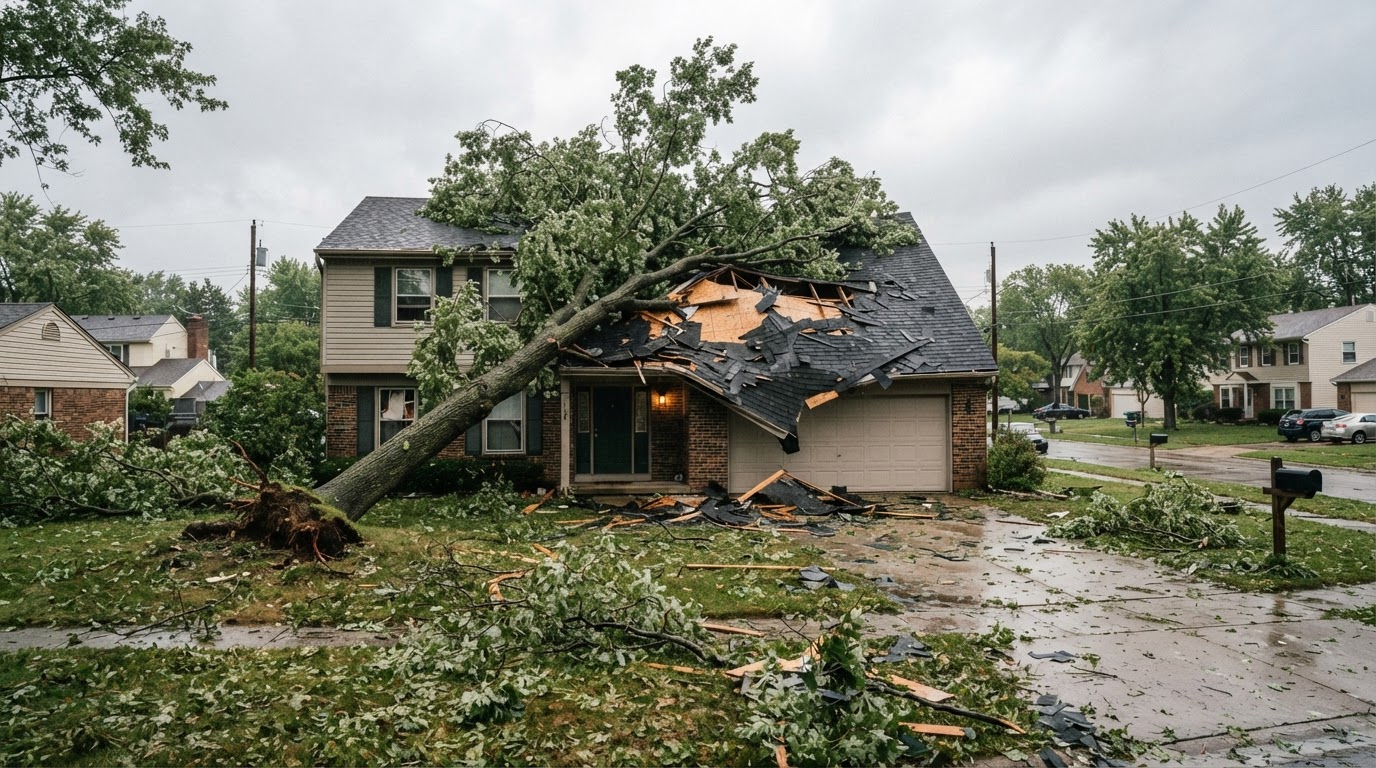
A tree falling on your house is one of the most stressful things a homeowner can face. In an instant, a mature shade tree can break through a roof, damage a wall, or knock down power lines — and the first question is almost always the same: what do I do now? The steps you take in the minutes and hours after a tree falls matter far more than most people realize. This guide walks through what to do, in order, when a tree comes down on your home, garage, or another structure — with an emphasis on safety first, then documentation, insurance, and professional tree removal. Across the Greater Cincinnati Tri-State, severe thunderstorms, straight-line winds, ice storms, and saturated soil regularly bring down mature trees that seemed fine the day before. Knowing what to do ahead of time can help you protect your family, your property, and your insurance claim.
Step 1 — Make Sure Everyone Is Safe
Before anything else, make sure the people inside the house are safe. Property can be repaired; a serious injury cannot. If a tree has come through a roof or wall, move everyone away from the damaged area and out from under any compromised structure. Broken branches and suspended limbs can fall without warning, and a tree resting on a house can shift suddenly as its weight settles.
If the damage looks serious — a tree through the roof, a collapsed wall, a broken support, or any sign that the building's structure may be unstable — get everyone out of the house or out of the affected rooms. Stay clear of broken glass, hanging drywall, and cracked framing. If anyone is injured, if there is any sign of fire or smoke, or if there is any other immediate danger, call 911 right away.
Do not climb onto a damaged roof to inspect the situation, and do not attempt to move a large fallen tree yourself. A tree resting on a structure is often under enormous tension, and cutting the wrong piece can cause the whole thing to shift, drop, or roll. Keep children and pets away from the area until it has been evaluated.
Step 2 — Check for Electrical and Structural Hazards
Once everyone is safe, look — from a distance — for the most serious hazards. Downed electrical wires are the single biggest danger after a storm. A tree that has pulled down a power line, or that is resting against or tangled in utility lines, can energize the tree, the ground, fences, and even standing water nearby. Assume any downed wire is live. Stay far back, keep others away, and contact your utility company or 911 immediately.
Even when there are no downed wires, look for structural warning signs: a roof that has visibly sagged or broken through, a wall that has shifted or cracked, broken windows, or a tree leaning against the house in a way that could shift. Unstable branches lodged in the canopy above can also fall without warning. These are exactly the situations where professional help matters most.
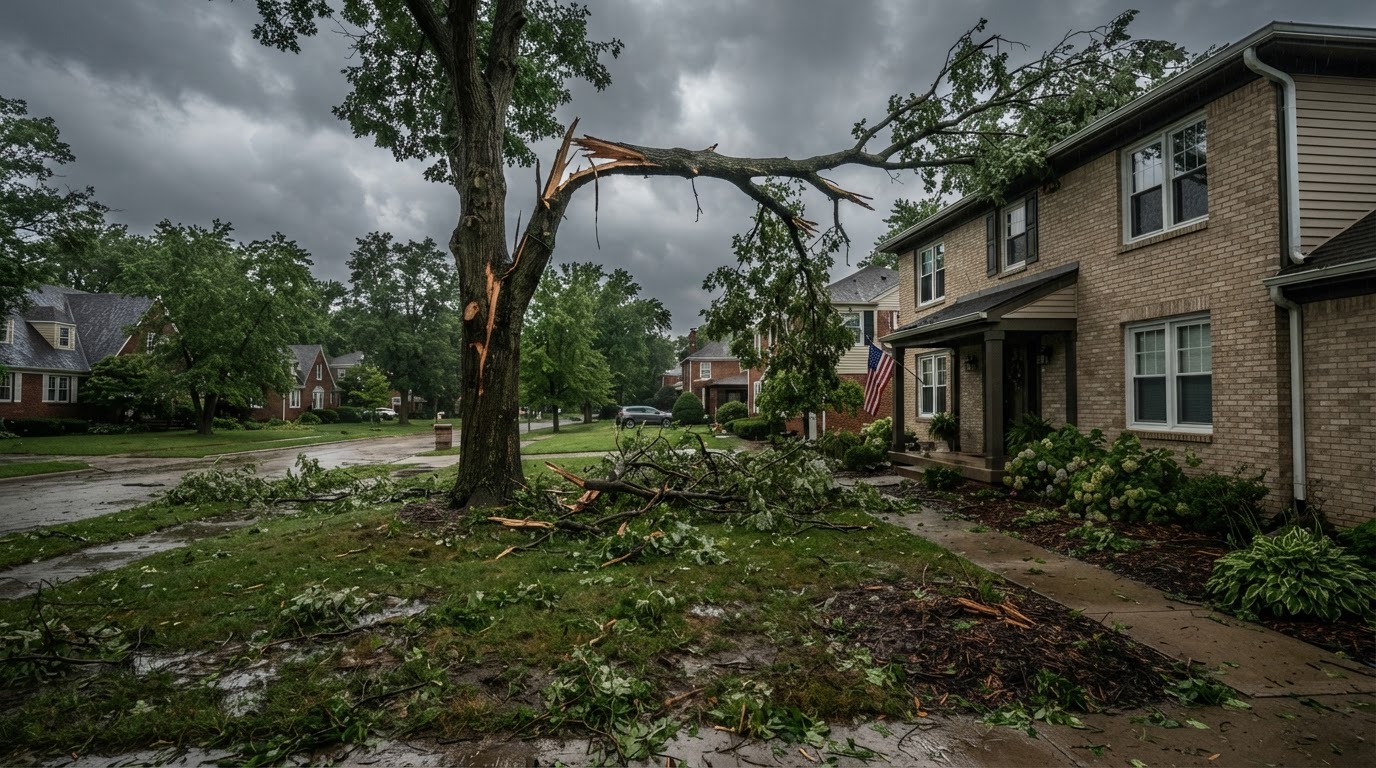
If you see downed lines, stay inside if you can, or move well away from the area. If the tree is near or touching utility lines, do not touch it and do not let anyone else try to cut it. Let the utility company make the area safe first, then a tree service can handle the removal.
Step 3 — Document the Damage When It Is Safe
When it is safe to do so — and only when it is safe — start documenting the damage. Photographs and notes are often the foundation of an insurance claim, and the more thorough your records, the smoother that claim tends to be.
From a safe vantage point, take photos of the tree, the point of impact, the roof or wall damage, any broken branches, and the surrounding area. Note the date and time, the weather conditions, and anything you observed when it happened. Keep receipts for any emergency expenses, such as a hotel stay or temporary repair. Do not enter an unstable structure to get a better photo — no picture is worth the risk.
Avoid disturbing the scene more than necessary before the tree is removed. The position of the tree, where it broke, and how it landed can all be relevant to your insurance adjuster and to the tree service planning the removal.
Step 4 — Contact Your Homeowners Insurance Company
Contact your homeowners insurance company as soon as you reasonably can after ensuring safety and documenting the scene. Most policies want prompt notice of a covered loss. When you call, be ready to describe what happened, what was damaged, and whether the tree came from your property or a neighbor's.
Ask about the claim process, whether emergency mitigation is covered, and whether the cost of removing the tree may be included. Keep your claim number, the adjuster's name, and any reference numbers in one place. Whether tree removal is covered — and to what extent — depends on your specific policy, the cause of the fall, and the circumstances, so confirm the details directly with your insurer rather than assuming coverage applies.
In many cases, your insurer will want the tree removed promptly to prevent further damage, and documentation of the removal can support your claim. Keep all photos, receipts, and any paperwork from the tree service. This is not insurance advice — for your specific situation, rely on your policy and your insurance provider's guidance.
Step 5 — Contact a Professional Tree Removal Company
A tree resting on a house, garage, or fence is not a standard removal. The tree's full weight may be bearing down on the structure, the trunk and limbs can be under tension, and the access for equipment is often tight. Cutting the wrong piece first can send the tree dropping, rolling, or shifting in a way that causes additional — and avoidable — damage. That is why this work calls for a professional crew that can plan the removal before any cutting begins.
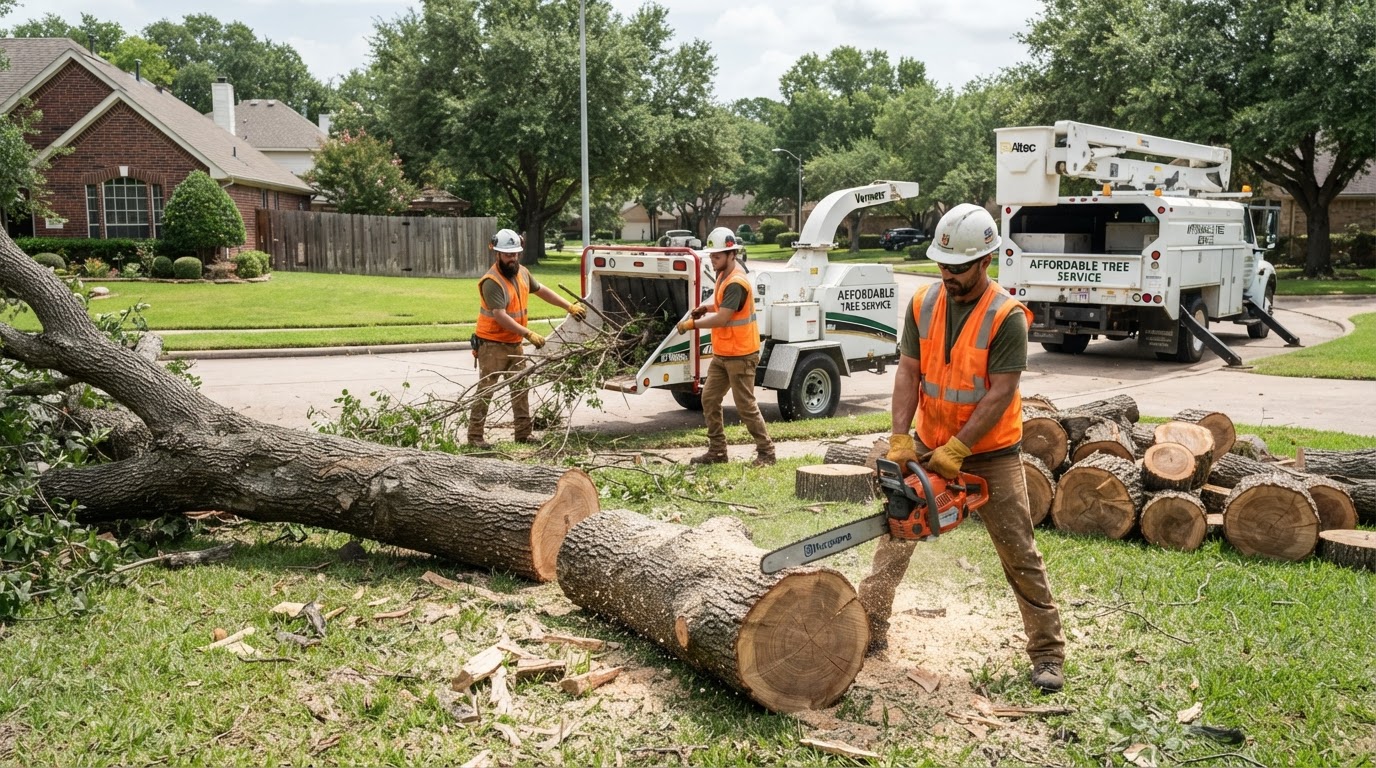
A qualified tree service will evaluate how the tree is resting, where the weight and tension are, what the tree is touching, and the safest way to dismantle it piece by piece. The crew may use rigging to lower sections in a controlled way, a bucket truck to reach over a structure, or careful cuts that relieve tension without releasing it. The goal is to remove the tree without adding to the damage already done.
MMM Tree Service provides emergency tree removal and storm damage tree removal throughout the Greater Cincinnati Tri-State — across Southeast Indiana, Northern Kentucky, and Southwest Ohio. If a tree has come down on your home or is threatening to, we can help plan and carry out a safe removal. We do not claim a guaranteed response time; for any situation involving immediate danger, downed lines, or injury, contact emergency services or your utility provider first.
Step 6 — Coordinate Tree Removal and Property Repairs
Removing the fallen tree and repairing the damaged structure are two separate jobs. MMM Tree Service handles the tree side — taking the tree down safely, dismantling it, and clearing the debris — but we do not perform roofing, structural, or general building repairs.
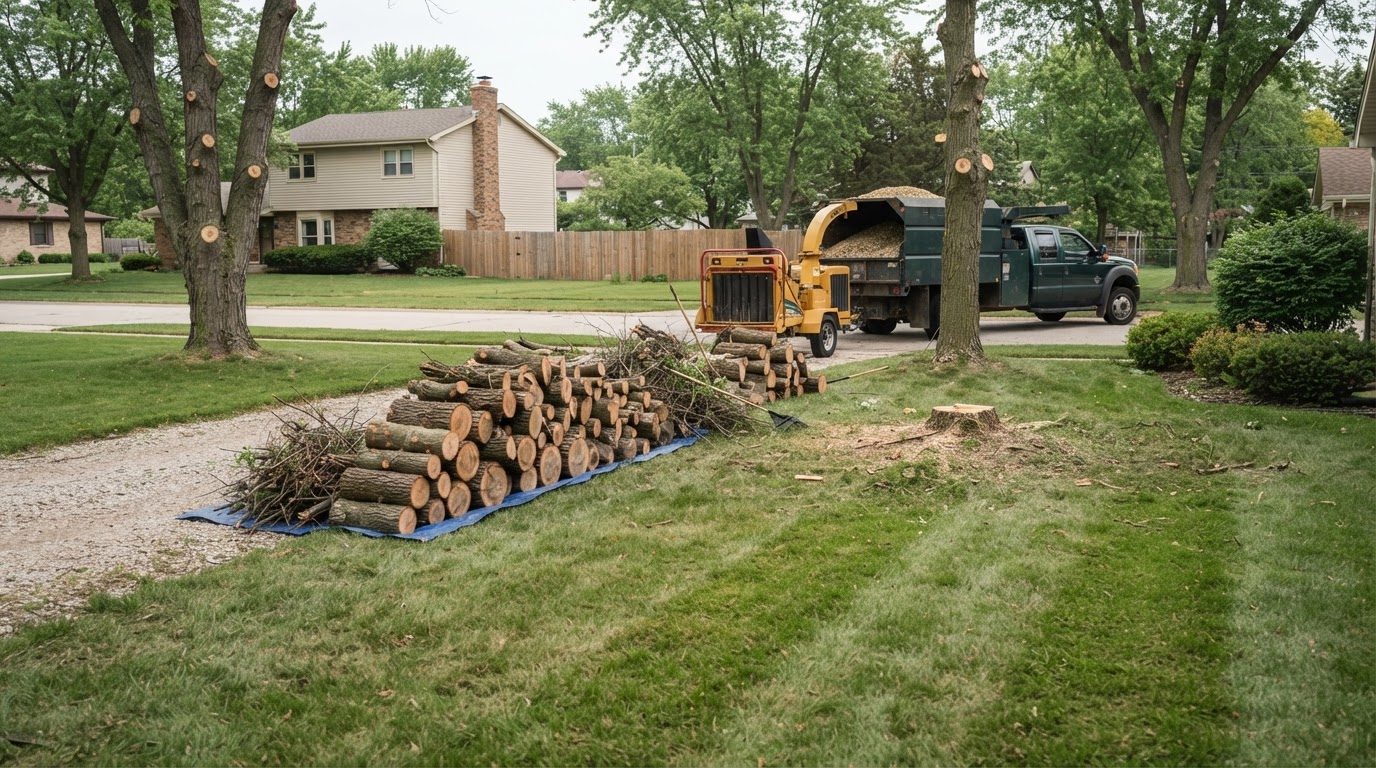
Once the tree is off the structure, a qualified contractor can assess and repair the roof, framing, siding, or interior damage. Your insurance company can often help coordinate the repair work and may have preferred contractors. We recommend coordinating with your insurer on both the tree removal and the structural repairs so the documentation lines up with your claim.
If you are unsure where the tree ends and the repair work begins, that is a normal question to ask. We are happy to explain what our tree removal includes and to leave the property in a condition that lets a contractor take over the structural work.
What If the Tree Came From a Neighbor's Property?
When a tree falls across a property line, responsibility can be more complicated than it appears. It may depend on who owns the tree, the tree's condition before it fell, whether there was any negligence, your state's laws, and what each party's insurance covers. It is rarely as simple as "the neighbor pays" or "the homeowner pays" — and the answer can differ from one situation to the next.
Because MMM Tree Service serves homeowners across Indiana, Kentucky, and Ohio, we avoid treating one state's rules as though they apply throughout the whole region. In most cases, each property owner's insurance may cover the damage to their own property, but the specifics depend on your policy and your state. This is not legal advice — for a clear answer in your situation, contact your insurer and, if needed, a local attorney. In the meantime, the priority is the same: make the area safe, document the damage, and get the tree removed before it causes further harm.
Does Homeowners Insurance Cover a Tree Falling on Your House?
Coverage varies by policy and by the circumstances of the loss. Many homeowners policies cover damage caused when a tree falls on an insured structure, and may include some of the cost of removing the tree — but the details, limits, and deductibles differ widely. Whether the tree was healthy, diseased, or dead before it fell can also affect how a claim is handled.
The best source for a definitive answer about your coverage is your own insurance policy and your insurance provider. When you call to report the loss, ask specifically what is covered, what your deductible is, and what documentation they need. We can document the removal with photos and notes, but coverage decisions are made by your insurer. We plan to cover this subject in more depth in a dedicated article — here, the goal is simply to help you take the right first steps.
Frequently Asked Questions
Below are concise answers to the questions homeowners most often ask after a tree falls on a house. They focus on practical next steps and safety rather than legal or insurance advice, which depends on your policy and your state.
Related Questions
Who should I call first if a tree falls on my house?
If anyone is injured, if there is fire, or if there is any immediate danger, call 911 first. If downed power lines are involved, stay clear and contact your utility company or 911. Once the area is safe, call your homeowners insurance company to report the loss, then contact a professional tree removal company to plan the removal. Do not attempt to move a large tree resting on a structure yourself.
Is it safe to stay inside a house after a tree falls on it?
It depends on the extent of the damage. If the tree has broken through the roof, damaged a load-bearing wall, or caused any structural sagging or shifting, leave the affected area — or the whole house — until it can be evaluated. Stay out from under any compromised ceiling or roof. When in doubt, get out and call for help.
Should I remove a fallen tree myself?
No. A tree resting on a house, fence, or other structure is often under tension, and cutting the wrong piece can cause it to shift, drop, or roll — creating more damage or a serious injury. This is work for a professional crew with the right equipment and training. Stay back and let them plan the removal.
Will homeowners insurance pay for fallen tree removal?
It depends on your policy, the cause of the fall, and the circumstances. Many policies cover removal when a tree damages an insured structure, but coverage, limits, and deductibles vary. Contact your insurer to confirm what your policy covers, and keep all documentation and receipts. This is not insurance advice.
What if a tree falls on my garage or shed?
The same steps apply — make the area safe, check for electrical or structural hazards, document the damage, contact your insurance company, and call a professional tree removal company. A tree on a detached structure can be just as dangerous as one on a house, especially if the building has shifted or if lines are involved.
How do professionals remove a tree from a roof?
A professional crew evaluates how the tree is resting, where the weight and tension are, and what it is touching, then dismantles it piece by piece — often using rigging to lower each section in a controlled way. The goal is to relieve tension safely and remove the tree without adding to the damage. The plan depends on the specific tree and site.
Need Help With a Fallen or Storm-Damaged Tree?
If a tree has fallen on your home, garage, or property — or a storm-damaged tree is threatening to — MMM Tree Service provides emergency tree removal and storm damage tree removal throughout the Greater Cincinnati Tri-State, including Southeast Indiana, Northern Kentucky, and Southwest Ohio. We can help plan and carry out a safe removal. For any situation involving immediate danger, downed power lines, or injury, contact emergency services or your utility provider first.
Serving the Greater Cincinnati Tri-State. See our service areas or browse more tree-service guides.